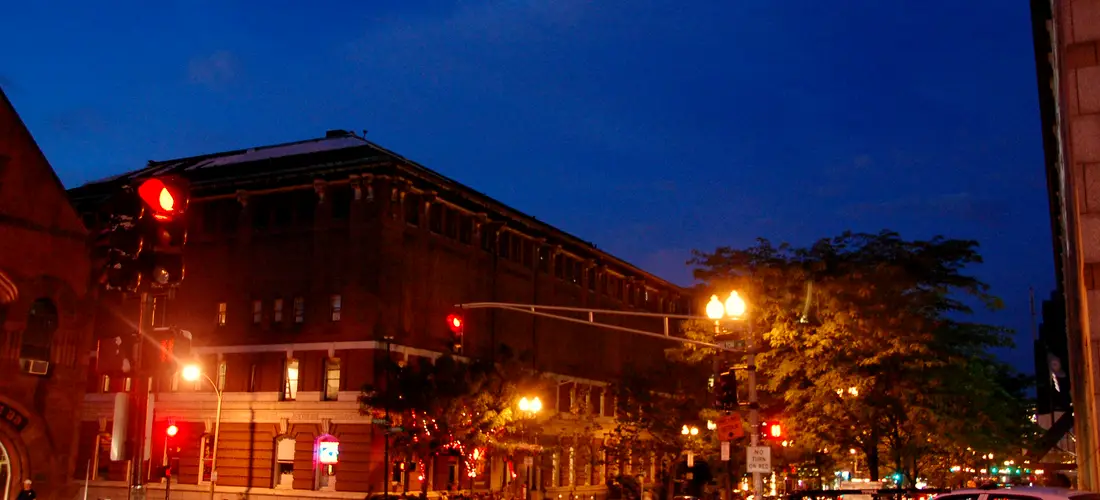

When the lights come up at closing time, they come up in every late bar in the city at once, and that is not a coincidence or a Puritan mood. It is one clause in a state law. For two months one summer Beacon Hill bent that clause and Boston got a look at the hour after. Then the clock went back. Here is who sets it, who tried to move it, and why your night still ends where it does.
The state draws the line, the city draws the rest
Beacon Hill sets the outer limit. The licensing statute bars any sale from two until eight in the morning on an ordinary day, and Sundays get their own rules, covered in our blue laws guide. A state senator put it in plainer English while trying to change it: the state prohibits any bar from being open between 2AM and 8AM, regardless of local preferences.
City hall decides everything inside that window. Each venue has an annual license with its own approved closing time, and an establishment without an extension must keep to the closing hours on that license, according to the city. The bar that pours until the legal limit is the end of the dial, not the default.
So when one bar kicks you out early, blame its license. When every bar does it at the same hour, blame the Legislature.
Two tries that went nowhere
The first serious push rode along with the T's late-night experiment. Mayor Marty Walsh backed a Senate proposal to let places in the MBTA's late-night service area close past the usual cutoff. Later trains, later bars: the logic was sound, and both halves died, a story we tell in our late-night T history.
A year later it came back as a bill on the mayor's agenda, pitched as part of a push to streamline regulation and help small businesses across the city. The sponsor, Sen. William Brownsberger, said at a hearing that the time was not right to extend last call. In his own writing he went further: he would recommend that the committee take no action on the bill.
The bill's own sponsor shelving it tells you how split the city was. One Allston-Brighton resident told the committee that the bill was too broad because it allowed up to 24-hour operation. Brownsberger also reported that round-the-clock language had been slipped into a municipal modernization bill. He blocked it, and in its place there would be a study of the concept. A study is the polite Beacon Hill way of saying later.
Summer 2026: the law that did it
Then came the World Cup. The state relaxed the rule once Gov. Maura Healey signed it on a Monday in June. The law let bars sell for one more hour, to 3:00 a.m. at the latest, until July 31. It was not automatic. The extra hour was left to the local licensing authority to approve. In Boston that meant applying to the city's Licensing Board.
Boston moved fast. The city's announcement is dated Wednesday, June 10, two days after the signing. In it the mayor said licensed businesses could fill out an online form and get same-day approval to extend closing hours. By July the Globe counted nearly 200 bars and restaurants staying open later, but that figure is for every municipality in the state that opted in, not for Boston alone.
What the extra hour did
The Globe's reporting is the best record of what happened. It found that consumer spending at bars and restaurants rose in Boston more than in any other host city early in the World Cup. The mayor said she wanted to keep the momentum going. The governor said of the pilot that she would like it to continue.
Babak Bina's group runs several bars and restaurants downtown and on Beacon Hill, among them jm Curley and The Wig Shop. He told the Globe that dozens and dozens of people were walking into JM Curley after the old closing time. That is one operator's report, and it is the kind that favours the extension, but it hints at where the late crowd goes: the Globe calls JM Curley a bar that draws restaurant industry professionals.
City Councilor Brian Worrell filed a measure to make the later close permanent. Any such change would still need the state Legislature, which has not been quick on this subject for a long time.
What a later license would have involved
The bill never got far enough to test this, but the city's own plan is worth reading. It said any bar in a pilot area that wanted a later close would go through the same community process already used for licensees who change their license agreement. In other words, the neighbors would have had a say before any bar got an extra hour.
The comparison everyone reaches for is New York. The Globe said a 3 a.m. close would bring Boston closer to New York City's legal closing time of 4 a.m.. An hour closer to New York is still an hour short, which tells you how cautious even the bold version of this idea is.
The case for 2 a.m.
Not everyone cheered. The Boston police patrolmen's union was blunt, saying little good happens after midnight. Mothers Against Drunk Driving said Boston should not be an exception. A bar owner told a local news crew that staffing a later close would be hard. His verdict: I think 2 a.m. is fine. He is not wrong about the T. Operators told the Globe that most subway and key bus service shuts down before the late bars do.
The industry's own lobby asked for patience rather than a fight. Steve Clark, who runs the Massachusetts Restaurant Association, did not oppose the idea. He said extending it right then was a little premature.
Our view: later last call without later trains is a trap for the person who drinks the third round and then has no way to get home. The honest version of the argument is a package, hours plus transit plus a safe way home that is not your own car. Whoever sells you the first part without the other two is selling you a bad night.
What to do with this
The pilot had a hard end date written into the law, and we found no source showing it was extended. Assume the old closing time is the ceiling and that your bar may close earlier. Check the venue's own posted hours before you build a night around a late close.
If you do end up out late, work backwards from your ride. The Last Train page shows tonight's last departures, and getting home after last call covers buses and the fallbacks. If you are hungry at the end of it, Eat Late lists what is open. And if you want the other big rule that shapes what you pay for a drink, read the happy hour ban.
What that cutoff does to a night's budget is worked out in what a night out costs in Boston.
- willbrownsberger.com?p=228901
- content.boston.gov/node/16590306
- dotnews.com/2014/proposals-seen-likely-reshape-nightlife-boston
- dotnews.com?p=46831
- nbcboston.com/news/politics/mass-set-to-loosen-alcohol-laws-temporarily-this-summer
- bostonglobe.com/2026/07/09/business/boston-bars-3-am-closing-time-permanent
- nbcboston.com/news/politics/healey-touts-the-vibe-wants-later-bar-hours-to-stick-ar
- whdh.com/news/boston-city-councilor-to-propose-permanent-3-a-m-last-call-for-b
- malegislature.gov/Laws/GeneralLaws/PartI/TitleXX/Chapter138/Section12