The best recent story on Allston punk is titled You Just Missed It, and that is the neighborhood's music history in four words. The same 2023 story puts it more bluntly: the house at the center of the story was on its way to becoming luxury apartments. Allston has been telling that story for decades, and it keeps coming true.
Where "Rock City" came from
The Boston Institute for Nonprofit Journalism says that in the 1960s, 70s and 80s Allston was known as Rock City because of its venues and its young artists. It names Great Scott and O'Brien's Pub among them. Only one of those is still ours to recommend. O'Brien's Pub is on our list. Great Scott is not on our list.
The label was never only about clubs. A local historian quoted in the same story argued that there is very little sympathy for the displaced "Rock City" crowd, because that crowd displaced people before them. It is a good corrective to the nostalgia. Every era of Allston music was a gentrifier of the one before.
The Underground: 15 months, 103 people
The best-documented room is the one that barely lasted. Vanyaland wrote that the Underground at 1110 Commonwealth Ave ran from February 1980 until June 14, 1981. The room had a legal capacity of 103. It was also a pipeline for British bands like New Order playing Boston for the first time. Locals like Mission of Burma played there often. A website by Jan Crocker has since preserved its sound and stories.
The building is now a dorm. The same story describes the site as a towering dorm near Packard's Corner. That is the shape of the whole history: a room that mattered, and student housing over it now.
When the clubs left, the basements stayed
The reporting traces a hinge to the closing of the Rat in Kenmore Square in 1997. After that, the story says, local clubs began to shift away from the underground. Many rock venues like Harper's Ferry shut their doors in the following decade. Survivors like Brighton Music Hall shifted away from underground bands.
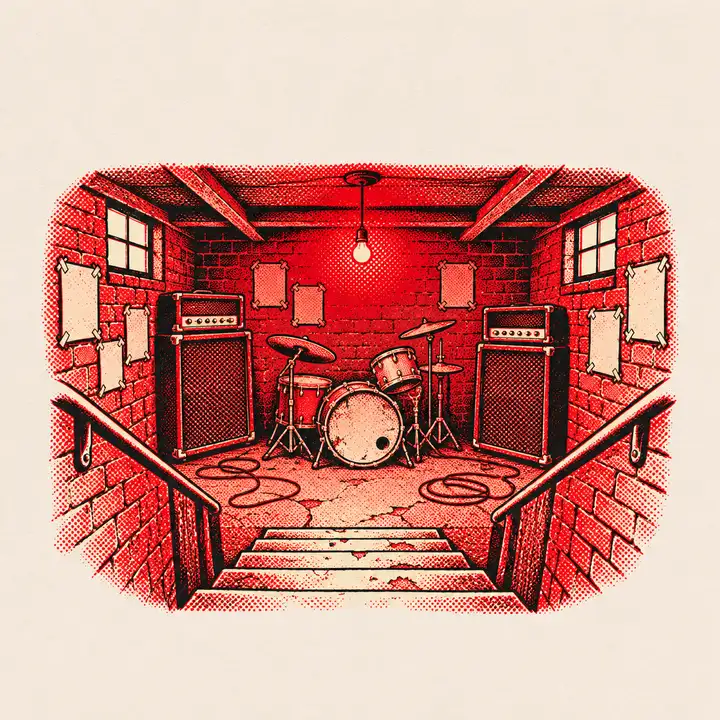
The next generation, in the writer's words, had begun playing in basements. The history of the house show is a history of a city that priced out its own clubs. Our read is that the basement was a response, not a trend.
Ram Ranch, and the end of one kind of house
The house the story follows was Ram Ranch. Its former residents described the mission as hosting as many shows as possible. The story calls it one of the longest running Boston punk venues of the 2010s.
It ended without drama. The article reports its last show was in July and that residents left over unpaid rent. There was no raid. The house simply stopped being affordable. A librarian and punk historian says in the same piece that house shows were still going strong through the start of the pandemic, so the end of one house does not close the scene.
Be clear about what these spaces are. The reporter writes that underground venues like Ram Ranch are illegal and face opposition from police and government. We do not list house venues, and we do not publish addresses. Our rule here is the same as everywhere on this site. Licensed rooms, posted hours, a safe ride home.
Why the basement kept winning
Nobody wrote a business plan for it. A photographer quoted in the Ram Ranch story called the shows extremely energetic, dirty sweaty fun in a tiny basement. The crowd, the story adds, mixed college students, skaters and the occasional lost visitor from New Hampshire. That is the draw, and it is also the risk. A small room with one door and low pipes has no margin for a crowd that grows or a night that goes wrong.
That is why this guide points you to the licensed rooms for a night out and keeps the basements in the history section. If you are going to a house show anyway, that is your call. Go with a friend, know where the exit is, and plan your ride before the first band.
What is left
The WERS field guide to Allston's DIY spaces, from a few years back, describes houses with their own habits. It mentions a red lightbulb over the crowd at one. It describes a scrapbook of setlists pinned to a wall at another. It also notes that some residents of one house came from an older house before it. The names turn over every few years. The habit stays.
Compare the sizes. The Underground held a legal 103. Brighton Music Hall is a 476-capacity club. Paradise is a 933-capacity hall. Both are several times the size of the Underground. Our reading is that Allston's licensed rooms got bigger and its basements stayed small, so the small-room energy moved down the stairs.
For a night you can actually plan, the licensed rooms are the better bet. Brighton Music Hall, Paradise Rock Club and O'Brien's Pub are the nearest rooms in our guide, and The Avenue is nearby. They are not basements. They are what the neighborhood has now.
What to skip, and what is worth the cover
Skip any plan that depends on finding a house show. By the reporting above these are illegal, they move, and the people who run them do not want you to find them. Worth the trip: the licensed rooms, where the calendar is posted and the exits are marked.
Worth reading before you go: the Vanyaland story on the Underground, for what a 103-person room can do. Skip the nostalgia that says only the basement was real. The same BINJ story quotes a historian saying the "Rock City" crowd displaced people before them, and that is the honest reading of the neighborhood.
Getting home
Allston is on the Green Line and on bus routes, but the late hours are where it gets hard. See the last train page before a late set and getting home after last call for the rest. Do not drive after a show, and do not leave a friend to find their own way home.
What to do with this
- For the history, read the BINJ story and the Vanyaland piece before you go anywhere.
- For a night out, pick a licensed room and check its calendar.
- Allston is on the Green Line. See the last train page and getting home after last call.
- For more rooms, see live music venues by size and the Allston and Brighton hub at neighborhoods.
- For food afterward, see late-night food. For a smaller, seated kind of night, see Boston jazz clubs.
The wider neighborhood plan is a night in Allston. The bars students use nearby are covered in Boston college bars.